
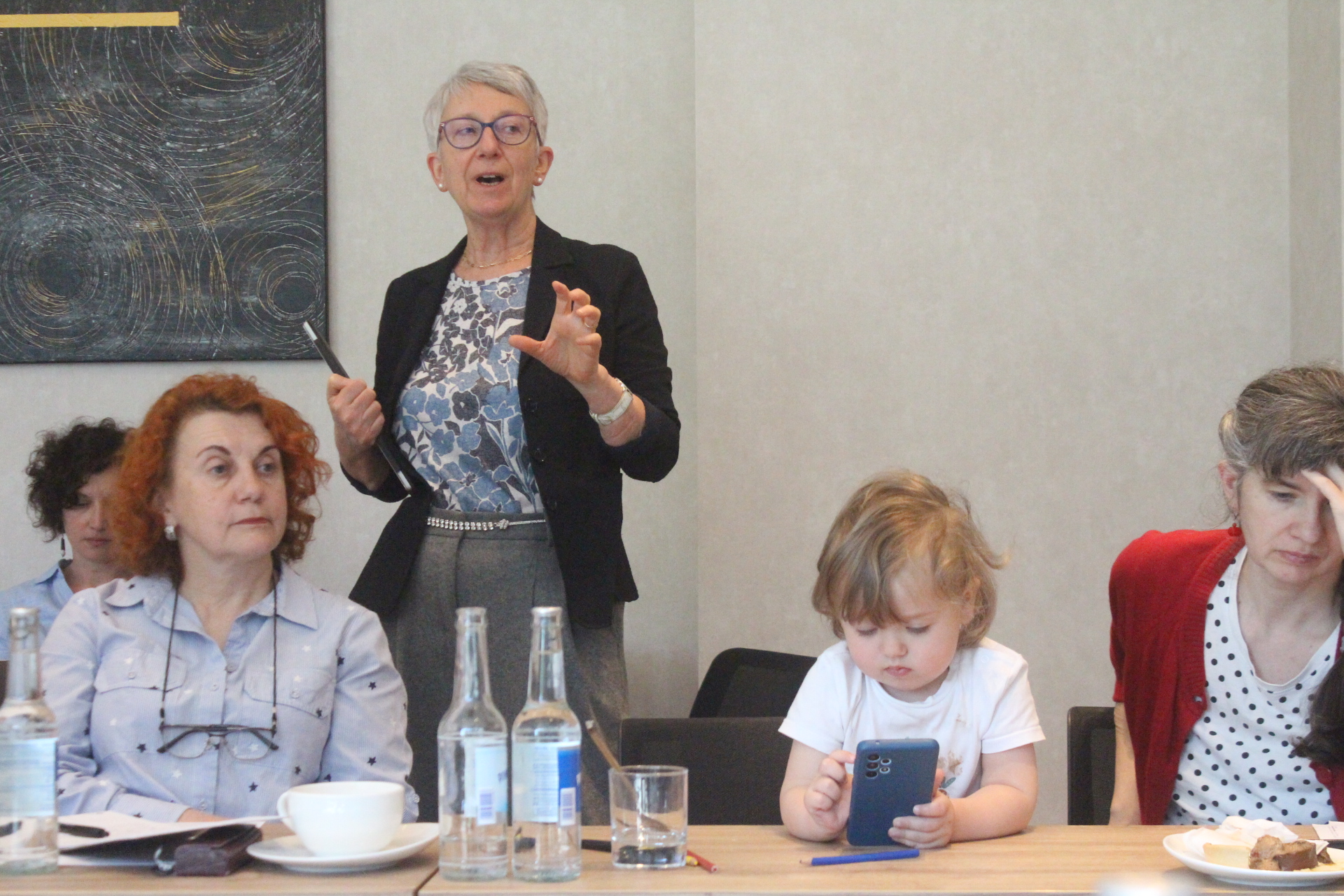
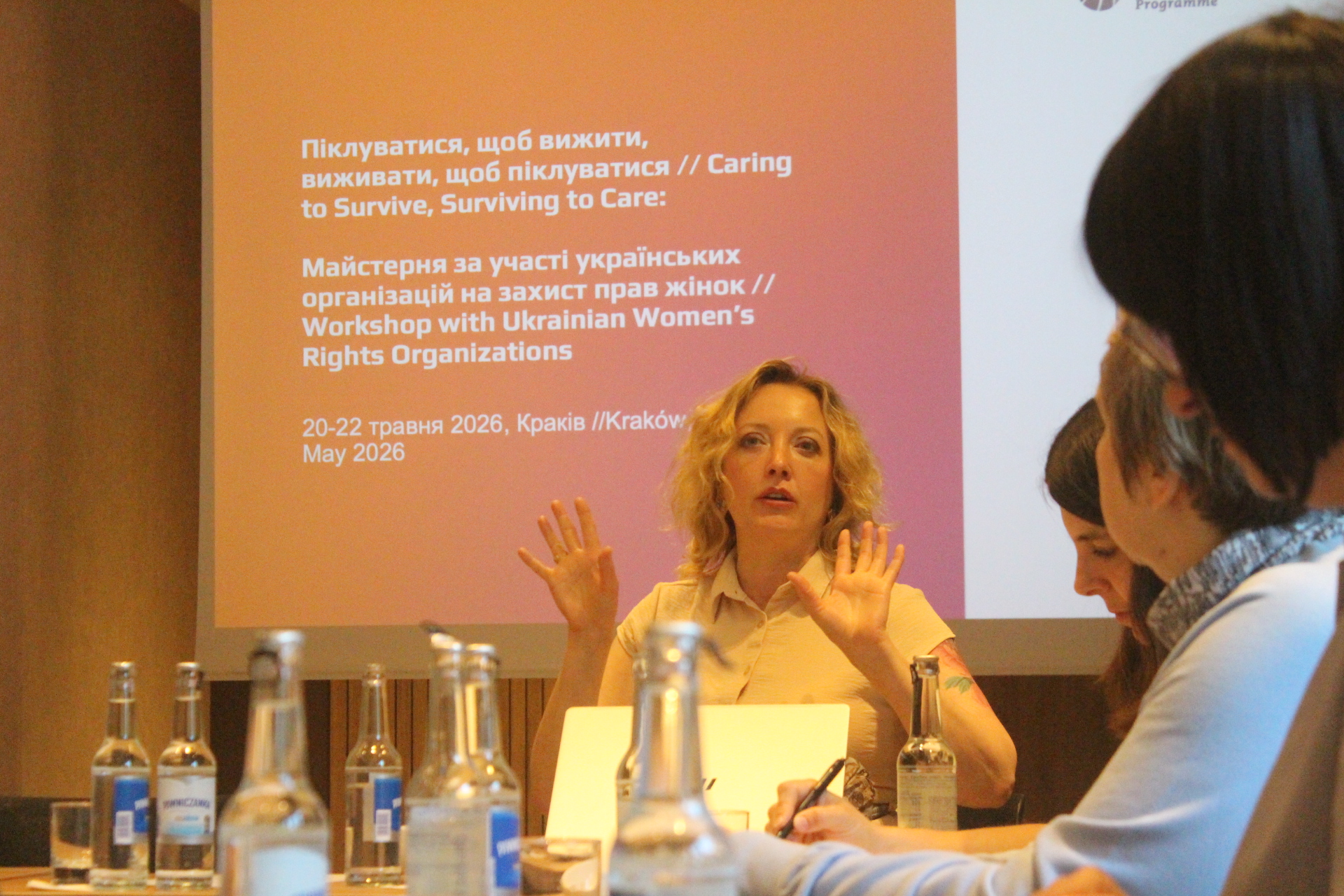
20–22 May, in Kraków, Poland, Ukrainian activists, representatives of human rights and research organizations, and members of the academic community gathered to discuss the role of care and care work in Ukraine amid Russia’s full-scale invasion.
The meeting took place within the framework of the international research project Caring to Survive, Surviving to Care, which explores how practices of care, social reproduction, and everyday survival shape Ukrainian society during wartime.
Participants discussed not only the project’s research findings, but also how these insights can be used to advocate for changes in social policy, labour rights, the care sector, and Ukraine’s post-war recovery.
Project lead Professor Elisabeth Prügl of the Geneva Graduate Institute emphasized that the research focuses on everyday survival practices and the invisible labour without which society could not function:
“We ask questions such as: What exactly do people do every day in order to survive? What support do those engaged in care work receive? We are particularly interested in how state institutions support people who sustain social reproduction and care.”
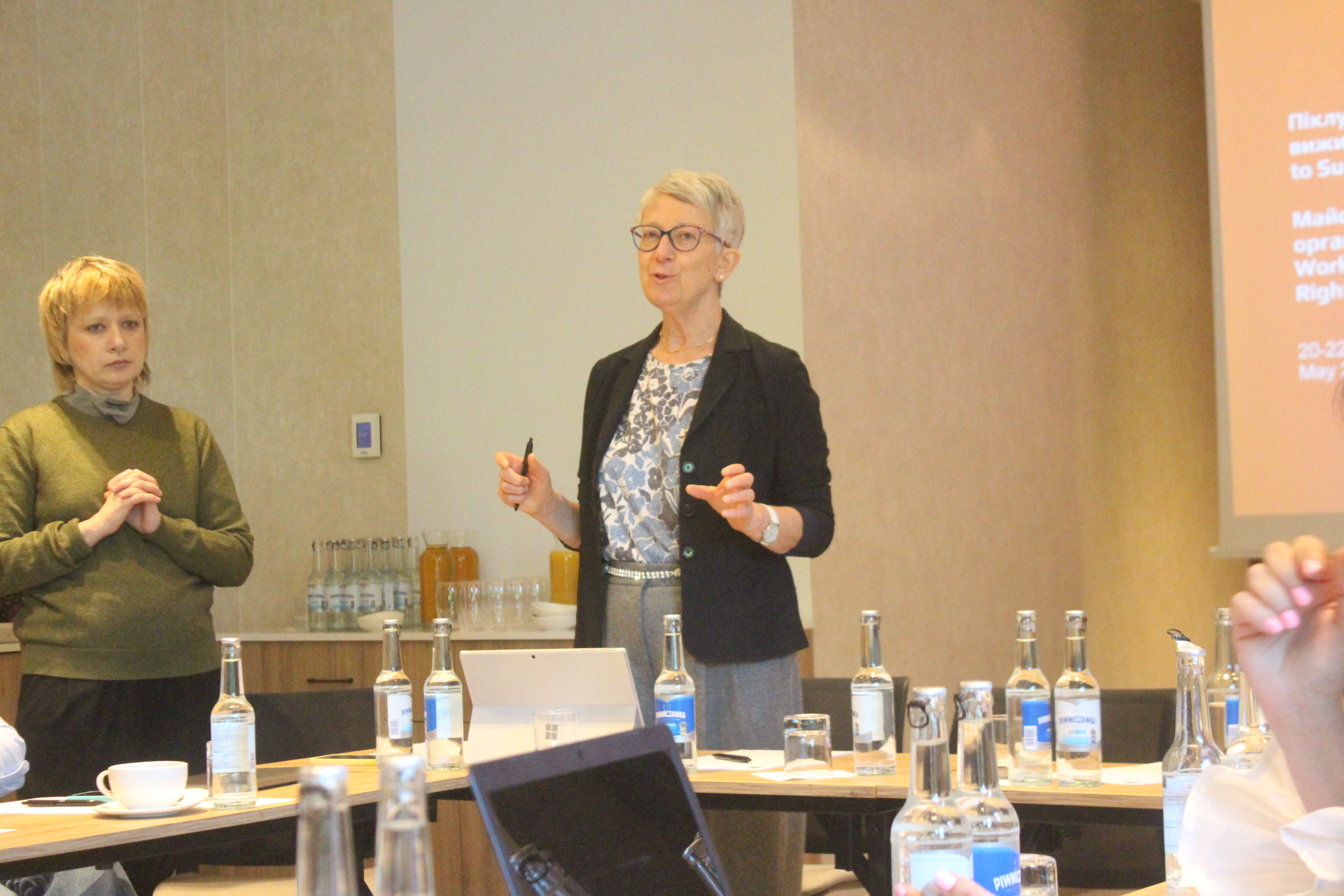
She stressed that the project brings together perspectives from both security studies and political economy, highlighting how care work often remains invisible despite being fundamental to survival during war.
Professor Yuliia Soroka of the Karazin Kharkiv National University and the Geneva Graduate Institute noted that the project has not only an academic but also a practical purpose:
“We cannot wait for the war to end to begin talking about recovery. Recovery practices are already taking place now, and we do not want to postpone change in society until ‘after the war.’”
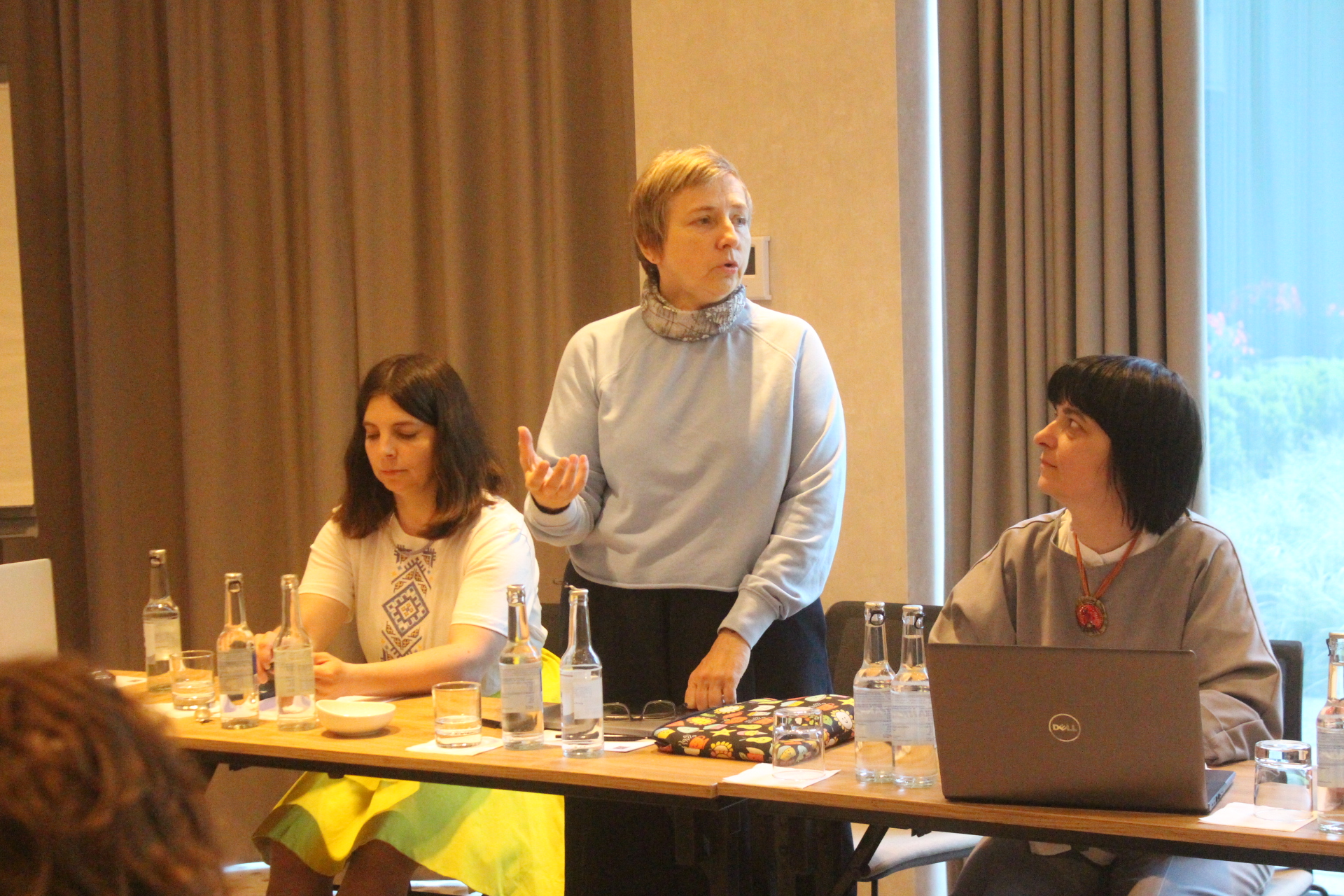
According to her, the project is grounded in several key concepts, including social reproduction, everyday survival, and the continuum of violence — the interconnected and ongoing nature of different forms of violence.
Project participant and feminist political economy researcher Nela Porobic drew particular attention to the relationship between care and structural violence:
“We see the consequences of violence not only as the consequences of war, but also as the result of broader processes — economic reforms, inequality, and the degradation of social infrastructure.”
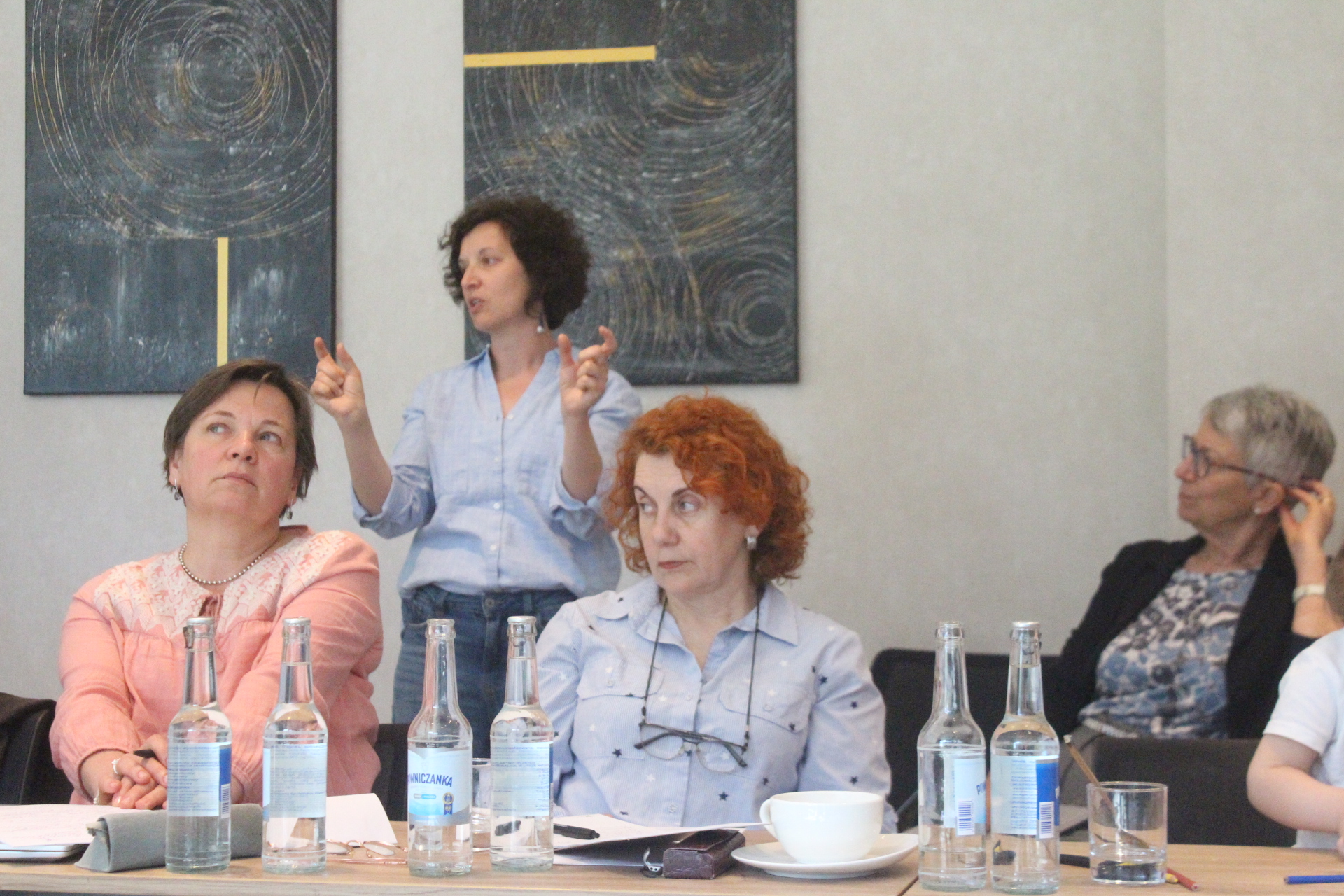
Nina Potarska of the Center for Social and Labour Research stressed that the war has deepened the crisis of care work. Needs for care and support continue to grow, while care labour remains invisible:
“It has now become absolutely clear that women’s reproductive labour is at the centre of society’s very existence.”
She also emphasized that security cannot be reduced solely to military issues:
“Security is not only about weapons and forceful responses. It is also about the social sphere, care, and the possibility to rest and continue living.”
Project manager Agnieszka Fal-Dutra Santos of the Geneva Graduate Institute pointed out how the concept of “care” or “caring” doesn’t always focus on the fact that it requires a lot of effort.
“Care is a way of being in the world, an attitude that recognizes and centers the needs of others around us. And that this attitude is often appreciated as a foundation for building peace, especially in feminist literature. But what is not recognized is that the caring attitude generates a lot of care work, which is often invisible and unrecognized.”
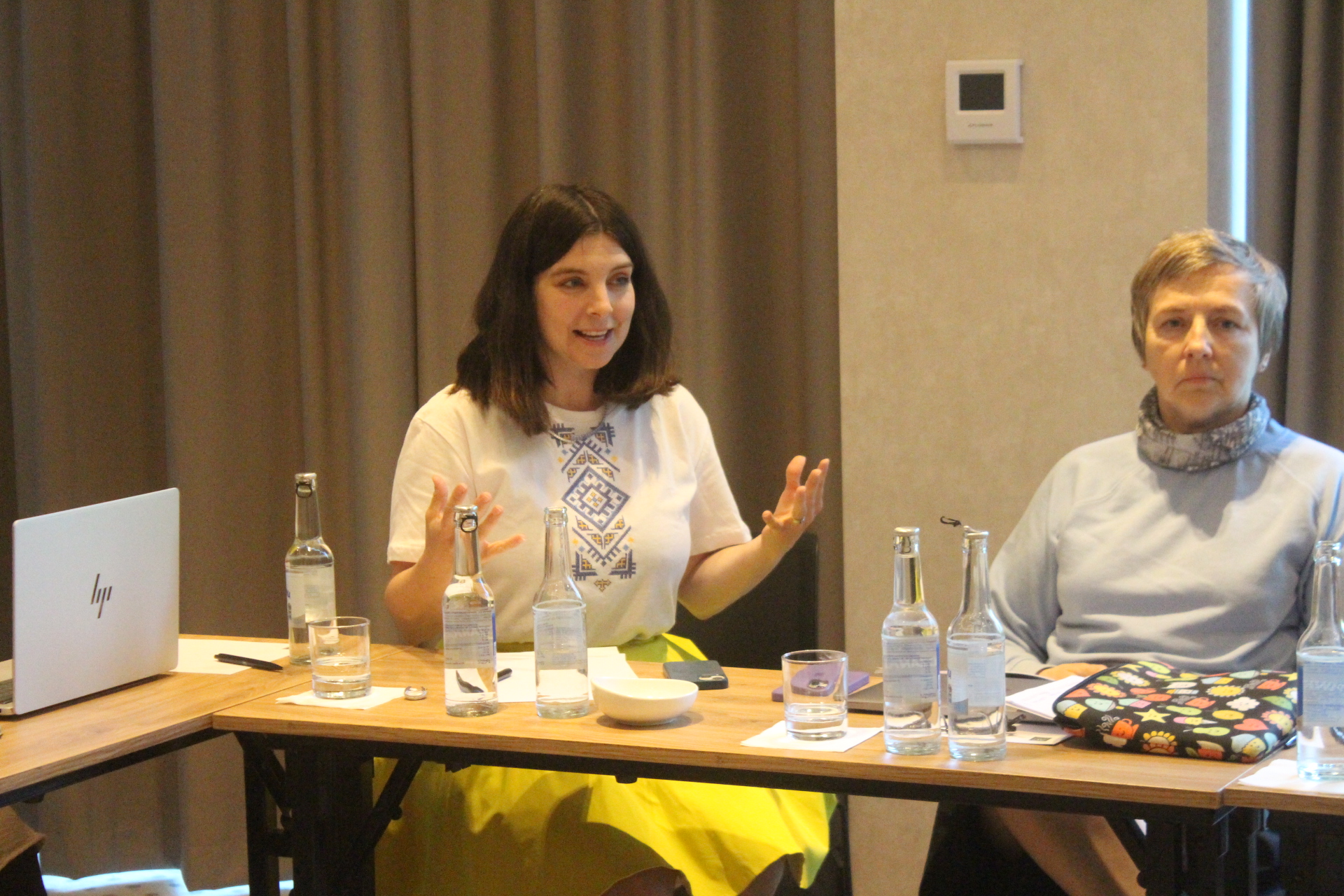
Throughout the discussions, participants repeatedly stressed that women today bear the primary burden of care — caring for children, older people, wounded persons, veterans, people with disabilities, and loved ones experiencing the trauma of war.
Participants also spoke about the exhaustion that accompanies care under wartime conditions and the social pressure placed on women, who are often expected to combine paid employment, motherhood, family caregiving, and emotional support for others.
Representatives of civil society organizations, researchers, and activists emphasized that Ukraine’s post-war recovery cannot be reduced to rebuilding infrastructure alone.
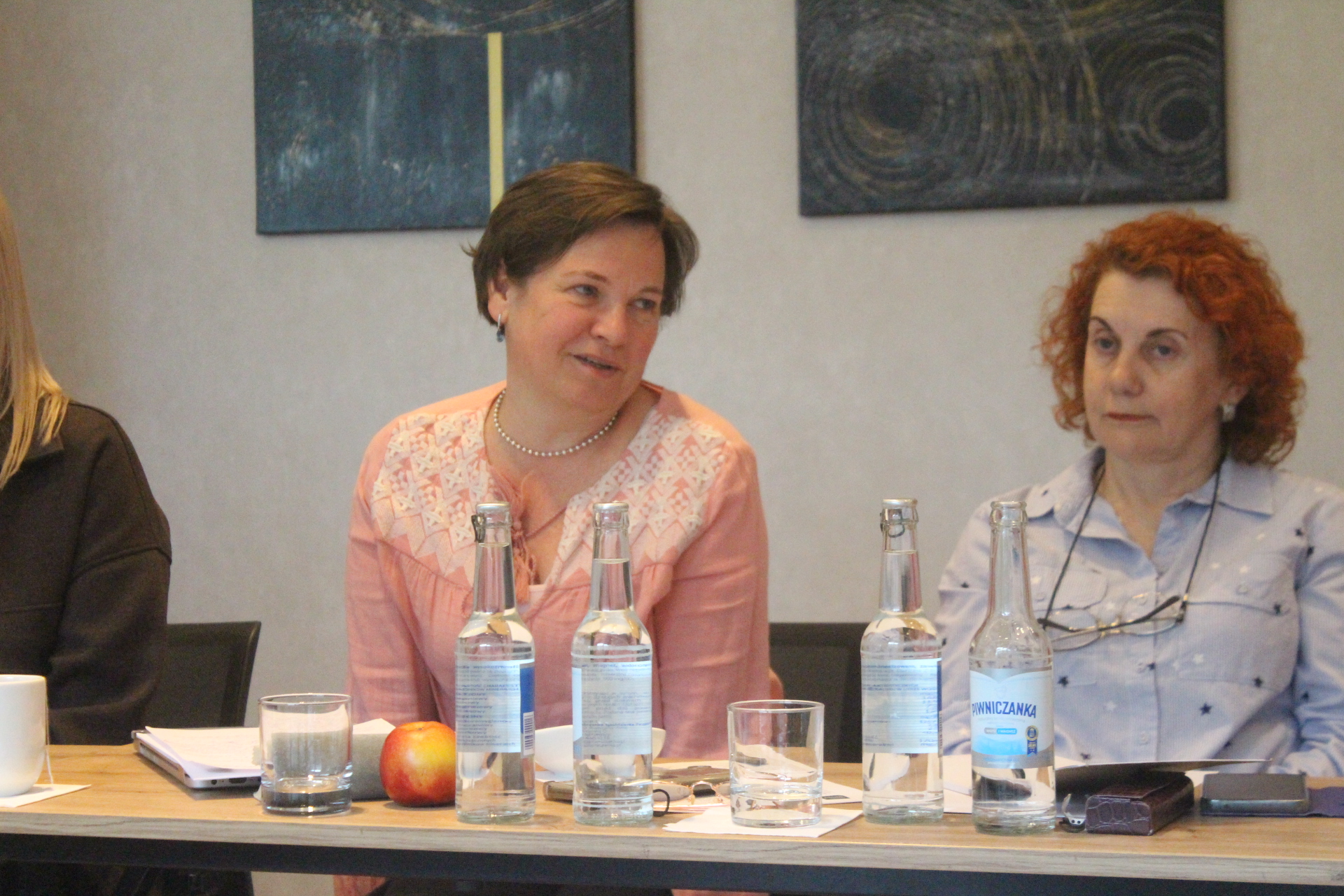
“Recovery is often perceived only as reconstruction. But people are often forgotten in these processes,” said Tetiana Chernytska from the Centre of Gender Culture in Kharkiv.
Olena Stryzhak, a representative of the organization “Positive Women,” drew attention to the fact that caring should be part of not only private life, but also organizational culture.
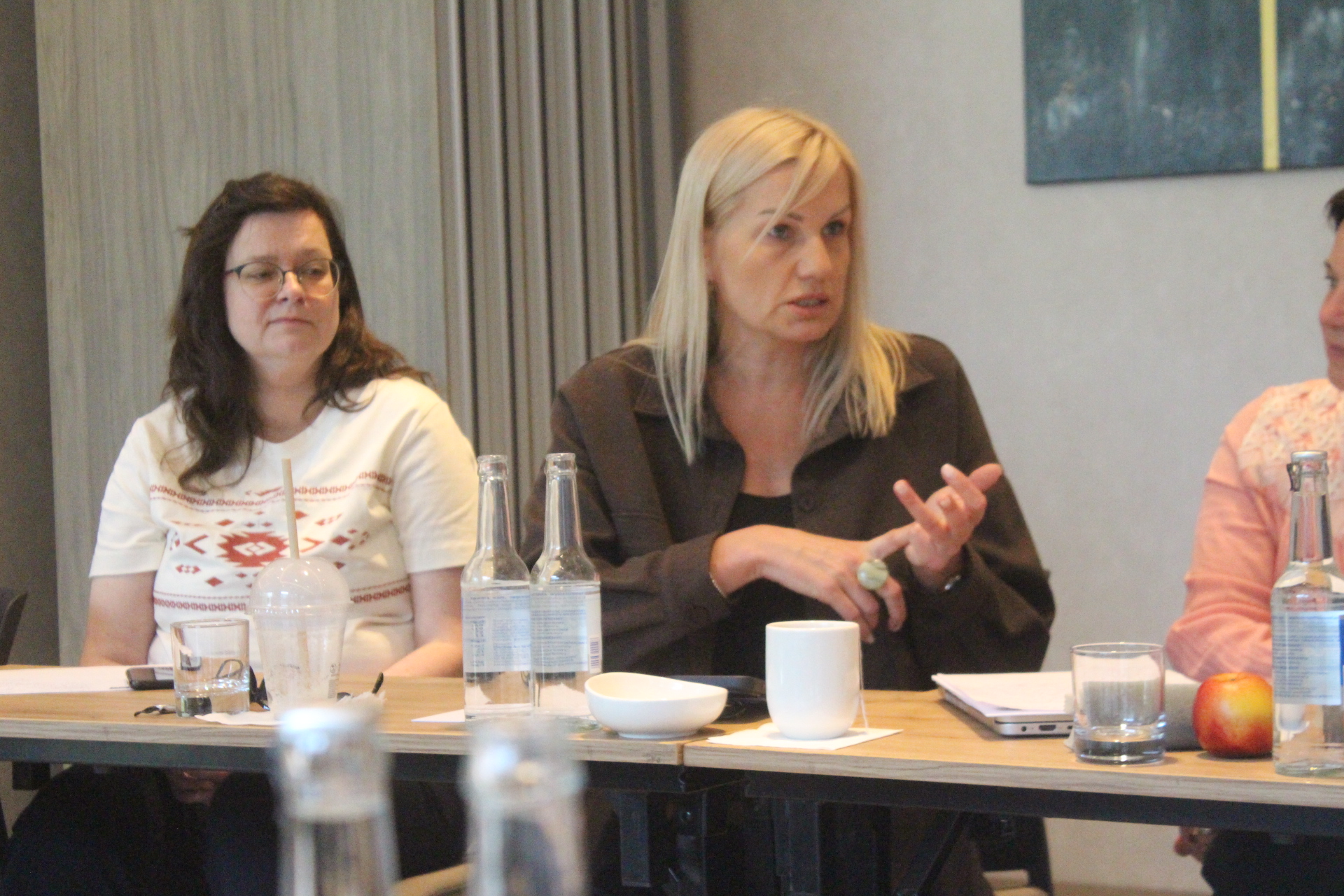
“I will start with my organization. I will start implementing the principles of caring at our events. Although it is very difficult to explain this to donors.”
Human rights activist Marta Chumalo from the organization “Women’s Perspectives” emphasized that today, women often find themselves faced with a moral choice between caring for others and their own exhaustion.
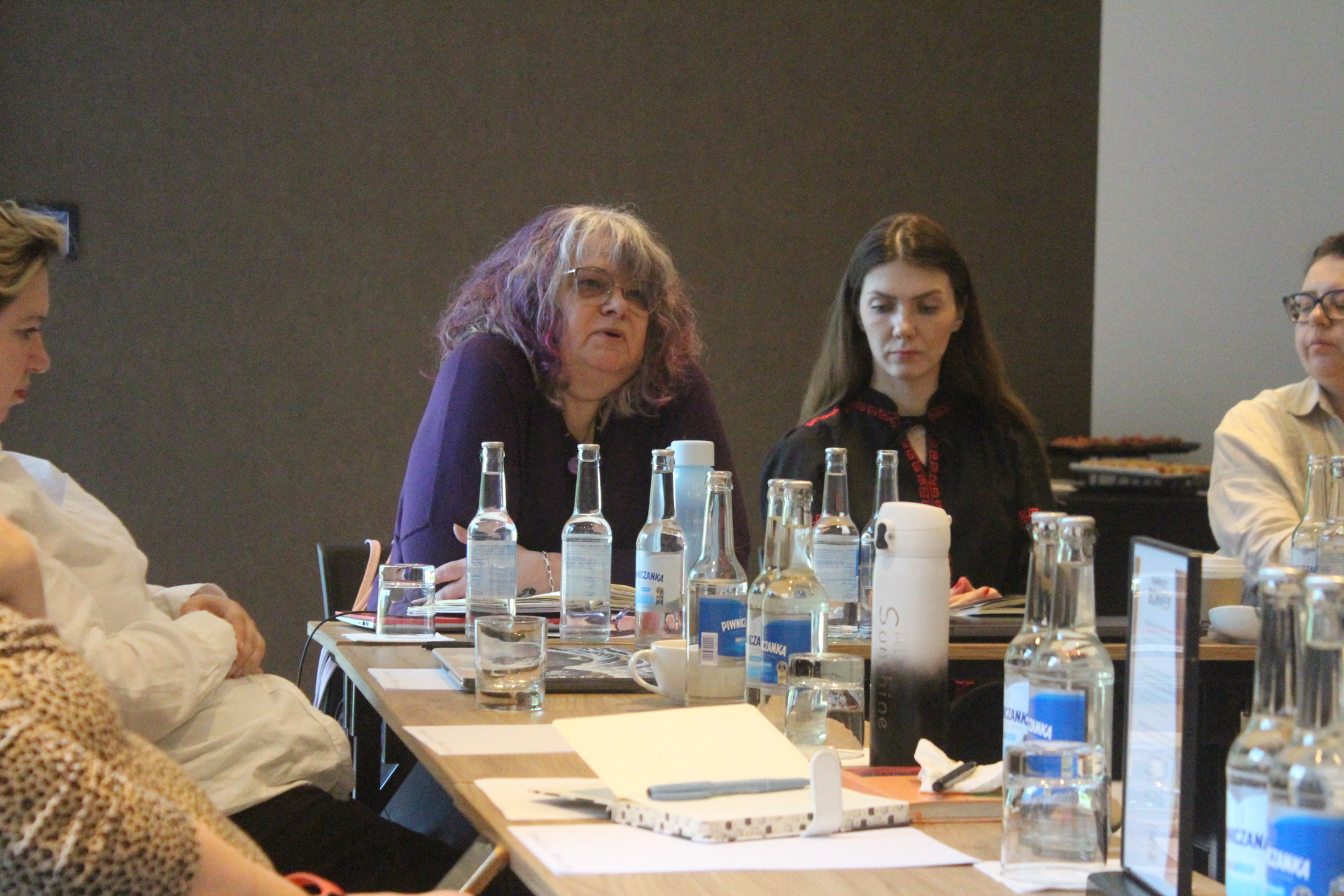
“I agree that caring is an important component of security. But at the same time, it is also a major tool through which the state exploits women.”
Researcher Daryna Korkach from the Gender in Details platform drew attention to another dimension of care work — the constant shortage of time and the inability to belong to oneself:
“There is enormous time pressure — and you cease to belong to yourself.”
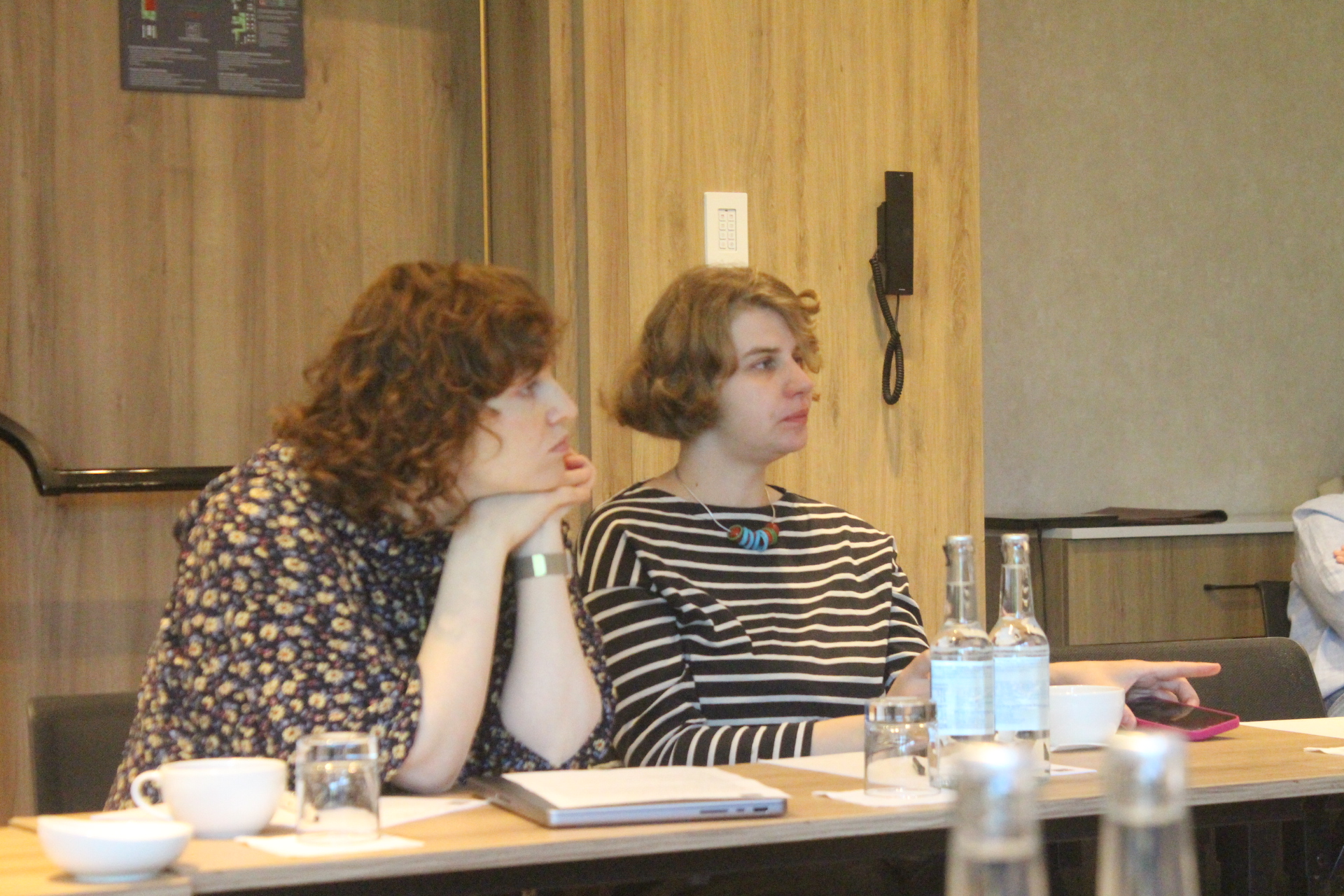
The participants also spoke about the exhaustion that accompanies caregiving in wartime, and about the societal pressure on women, who are often forced to combine paid work, motherhood, family care, and emotional support for loved ones. The participants also spoke about the rights of care workers, support for veterans and their families, the availability of social services, the state’s role in the field of care, and the need to recognize care work as critically important to the functioning of society.
Participants stressed that care is the foundation of social resilience during wartime — and for this reason, it must become visible in state policy, labour rights, and Ukraine’s recovery processes.