
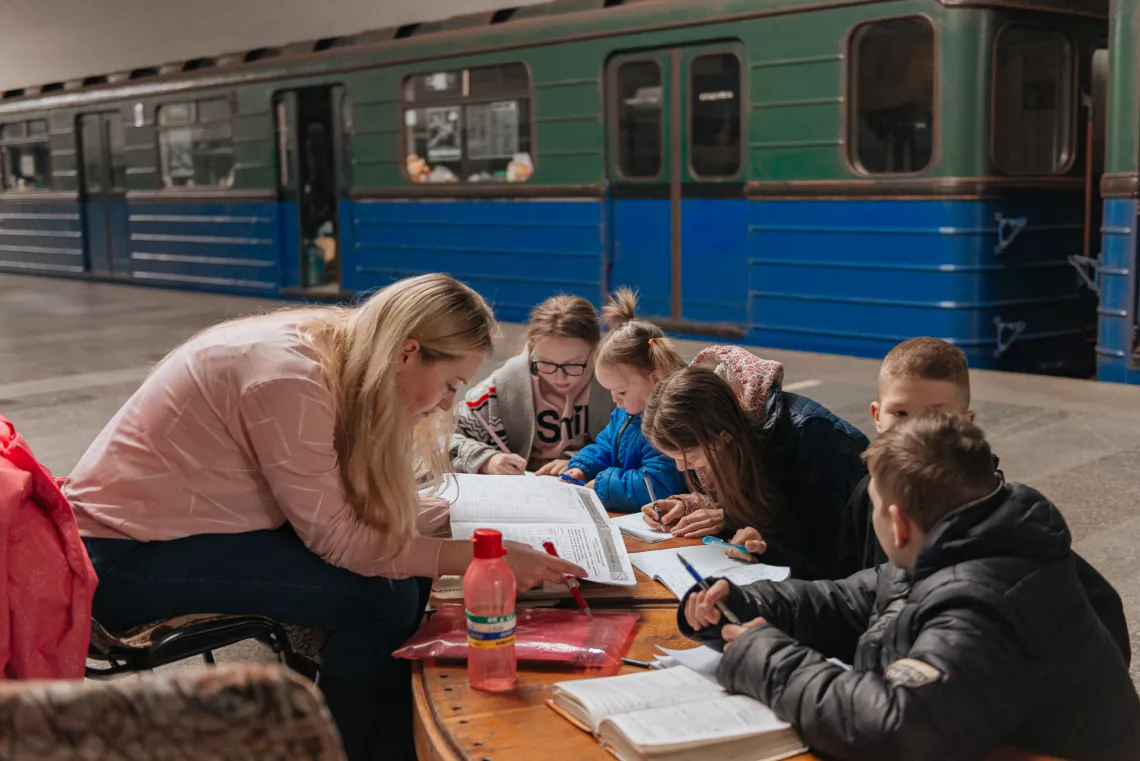
Violence produces new modes of functioning, new routines, rhythms that order the everyday. Social reproduction work – the work of caring for others, for the community, and even for the environment – is central to how the everyday rhythms are organized and shaped.
When faced with violence, social reproduction transforms – it becomes simultaneously more necessary and more difficult. Increased recognition of social reproduction – for example, in media coverage of people providing shelter to refugees, cooking for the troops, or caring for the wounded – stands in contrast to the exhaustion and depletion of those providing the care, as the demands grow exponentially.
The project “Caring to Survive, Surviving to Care” examines the intersectionally gendered practices of survival in the context of Ukraine. It documents how diverse Ukrainians experience and respond to different but interlinked forms of violence – from the violence of war and Russian invasion, to the economic violence unleashed by structural and austerity reforms. The project aims to bring more clarity to our understanding of three key concepts:
- violence (wherein social reproduction entrenches the patterns of violence and the norms that underlie it)
- survival (wherein social reproduction is re-shaped to serve the goal of survival of individuals, communities, and the nation);
- resistance (wherein the everyday routines and the labour of care become the site where alternatives to the current situation are dreamed out and prefigured).
Аnd how they intertwine in the context of war. It uses a combination of fieldwork in two oblasts in Ukraine, policy analysis, and a prefigurative workshop, in order to make a two-fold contribution: provide a concrete illustration of feminist conceptualisations of violence, and create knowledge for more gender-responsive recovery planning in Ukraine.
Research team members Agnieszka Fal-Dutra Santos and Yuliia Soroka shared the reflections regarding the study during the conference “Between Peripheries: Critical-Relational Security from CEE and the Global South” at Tallinn University. They are drawing on ethnographic and sociological studies conducted in Ukraine since 2014, as well as original interviews with Ukrainian activists and experts.
Thus, citing existing research, they noted that war is not the only source of violence that re-shapes everyday life, and the changes to everyday life are not value-neutral (Lomonosova & Provan 2024; Lyubchenko 2022). Defunding of social infrastructure and the shift of much of childcare and eldercare to individuals, adding more pressure to already overstretched households. Political discourse linking productive work to one’s value as a person (Lyubchenko 2022) and as a citizen (Strelnyk and Phillips, 2025) aggravates the sense of loss, isolation, and humiliation felt by many displaced persons due to loss of their work and everyday routine (Makeyev et al., 2017).
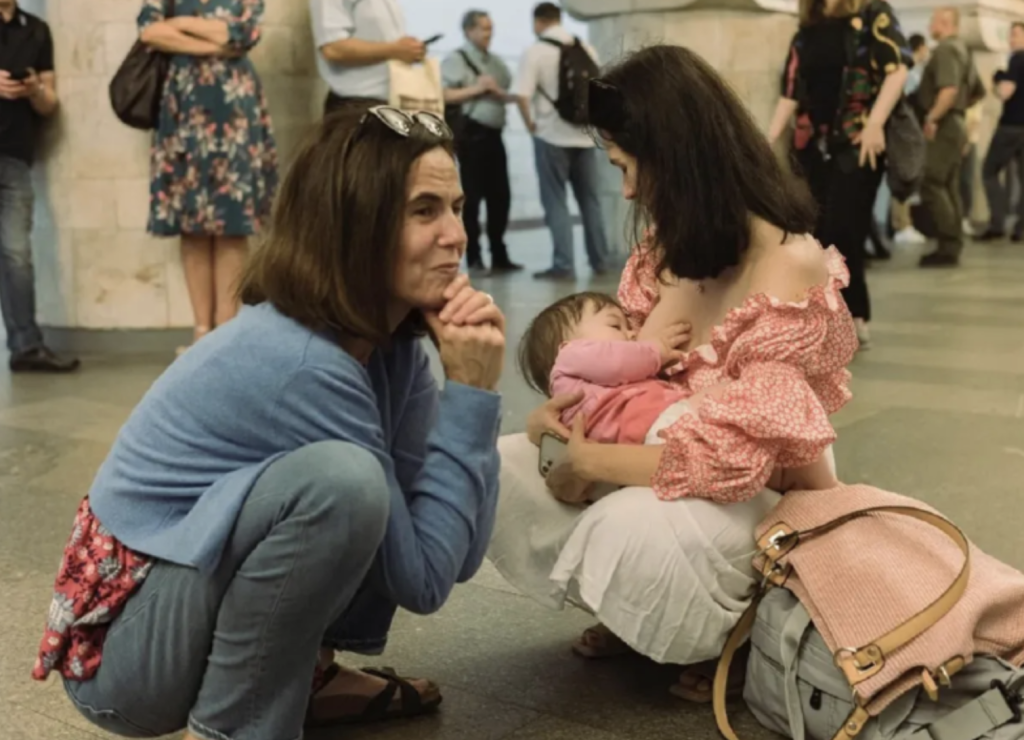
To illustrate how violence, resistance, and survival occur, examples from interviews are provided.
Everyday violence in Ukraine
One of the informants (52 years old woman), who worked on her own farm before the war, had to hide in the basement. Then, a fire after air attacks and the occupation of her village forced her to leave with her immobile elderly mother and husband. Before that, she was forced to let go of her cows and pigs, which she could no longer care for, and slaughter her chickens. When they returned after the deoccupation, they and only six other families found half of the village burned down. Now they work eight hours a day to rebuild the village and hope that their fellow villagers will return.
Everyday survival
Survival is often associated with the start of war. For example, an informant from Kharkiv (48 years-old women) ran to hide from the shelling with her two children at the metro station near her home. After spending several days on the underground platform among dozens of frightened and desperate people, she found herself preparing food for people in the metro together with other women. Kind of bottom-up self-organisation. The survival of one’s own family grows into the survival of the community.
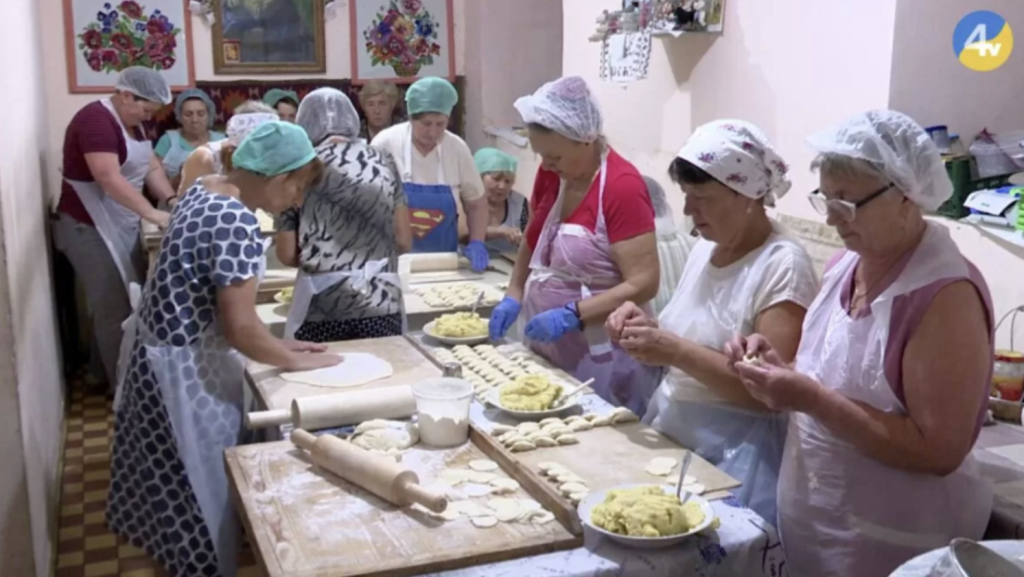
In the fourth year of the war, the task of survival has turned into a set of behavioural norms for many of our informants. For example, an informant from Kharkiv (a 35-year-old woman) uses only locations with shelters for her daughter’s education and entertainment.
Everyday resistance
An informant, a 35-year-old woman, a maths teacher from the suburbs of Kharkiv, whose husband’s parents’ apartment was destroyed completely by rocket fire, says: We are not trying to put life on hold. They celebrate birthdays, preserve tomatoes, and travel abroad with their students during the holidays. A 64-year-old former military serviceman goes to fish in a pond in Kharkiv’s suburbs, enjoying the foggy morning view. Every day resistance means continuing to be yourself in your actual social environment.
The experiences documented in the project “Caring to Survive, Surviving to Care” show that violence in Ukraine extends far beyond the battlefield, reshaping everyday life, social relations, and the labour of care. In this context, social reproduction becomes a crucial terrain where violence, survival, and resistance intersect. Caring for family members, rebuilding communities, cooking for others, or maintaining ordinary routines are not only acts of necessity but also practices through which people sustain life and dignity under conditions of prolonged crisis. Recognising and supporting these practices is essential for developing more gender-responsive recovery policies and for understanding how societies endure and transform in times of war.