
The war in Ukraine has a global dimension and has transformed the conditions for the functioning of states in the world. We are talking about systemic changes that are manifested in such aspects as energy and food security.
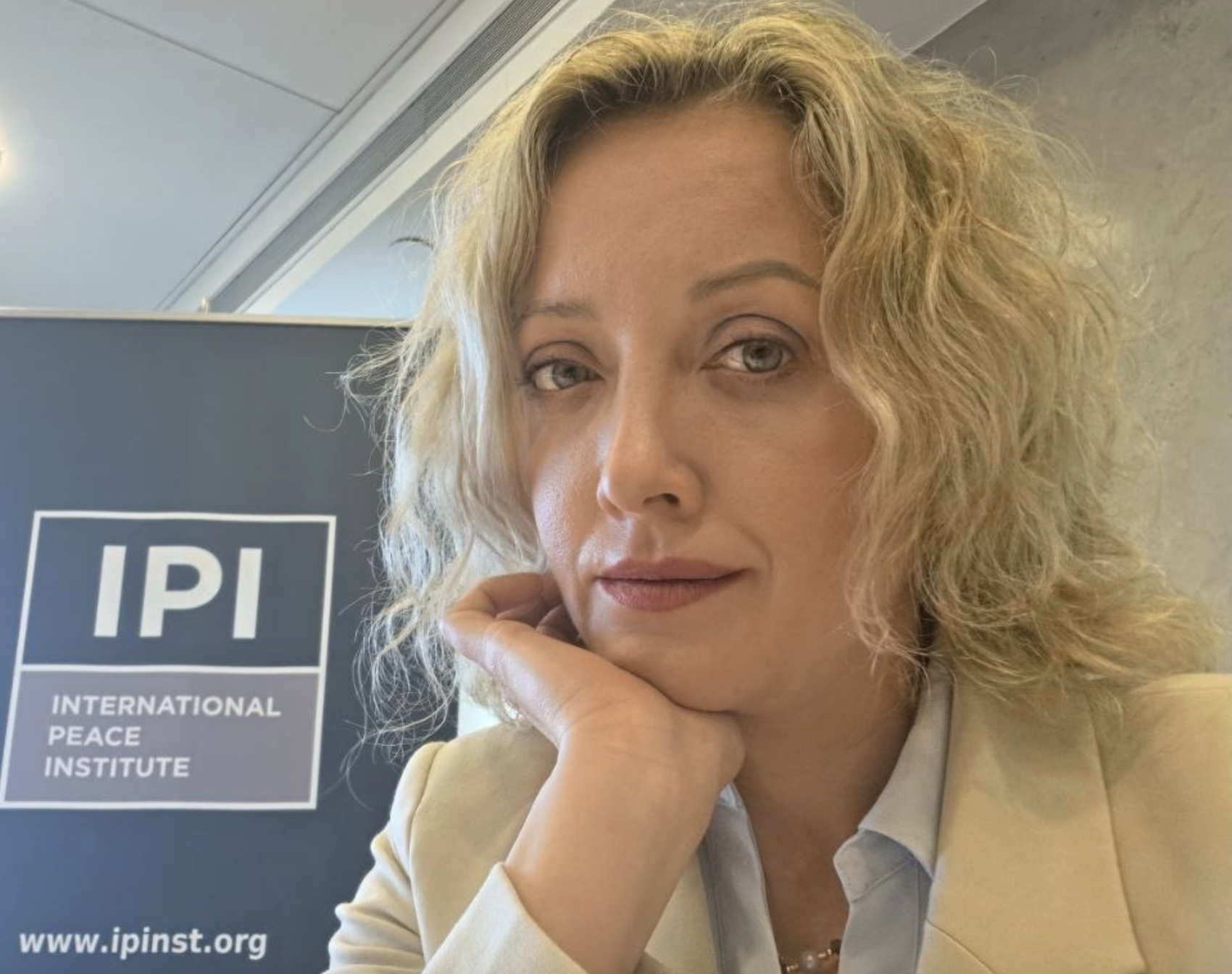
This was noted by Nina Potarska, director of the Center for Social and Labor Studies, a member of the international network Women’s Network for Dialogue and Enduring Peace, and a researcher of the project “Caring to Survive, Surviving to Care”, during a meeting of representatives of government delegations to the UN from a number of countries and the International Peace Institute.
She proposed changing the optics of the analysis of the war.
“Instead of considering countries separately, I propose to look at the war in Ukraine as a process that has already changed the very conditions for the functioning of states,” she emphasizes.
Yes, one of the first consequences of the war was the destruction of the previous energy architecture of Europe. But, according to the researcher, the changes are much bigger.
“The very logic of vulnerability has changed. Energy has become not just an economic resource, but a factor of political stability and social stability.”
This means that new geopolitical escalations — in particular around Iran — do not create a new crisis, but are superimposed on an existing one.
“Countries are reacting not from scratch, but from a state of already exhausted adaptation.”
The war also revealed the vulnerability of global food systems. Ukraine played a key role in the supply of grain and fertilizers, and the disruption of these chains had far-reaching consequences.
“The war showed how vulnerable the food security system itself is,” says the researcher.
Today, against the backdrop of rising energy prices, this pressure is only intensifying — especially for countries dependent on imports.
“The food crisis is not over — it has entered a more difficult phase.”
The third aspect is labor and migration. Millions of Ukrainians have become part of European labor markets. This has created new opportunities, but at the same time, new structural problems.
“We see a paradox: high employment levels are combined with systemic underutilization of skills,” emphasizes Nina Potarska.
People work, but often below their qualifications. This affects not only individual trajectories, but also labor markets and social systems themselves.
“Migration in times of war is not only a humanitarian issue, but a structural change in economies.”
Nina Potarska places special emphasis on a level that is usually omitted from political analysis.
These are everyday practices, such as caring for children and the elderly, supporting households, and mutual assistance in communities.
“These are the very practices that become the basis of survival. However, they have a limit. When the crisis drags on, the burden on them becomes excessive,” emphasizes the researcher.
This means that social resilience is not infinite and is distributed unevenly. War also changes political and institutional approaches.
“The need for quick decisions and flexibility has increased,” says Nina Potarska.
At the same time, long-term principles are being called into question, from neutrality to social policy models. New conflicts in the world only intensify these processes. If we consider all these processes together, it becomes obvious: we are not talking about an isolated crisis.
“The war in Ukraine did not simply create a crisis. It changed the basic configuration of risk,” the researcher emphasizes.
Events in other regions do not create a new system, but strengthen an already changed one.
But despite the dominance of conversations about geopolitics and security, the key mechanisms of resilience remain at the micro level.
“Resilience is formed at the level of those who take care of children, maintain a household, and support a community,” says the researcher.
It is this level, she says, that is least taken into account in political decisions. She suggests reconsidering approaches to responding to crises.
“If modern crises are interconnected, then responses to them should be interconnected.”
In particular, energy policy should take into account social burdens, economic decisions should have an impact on everyday life, and security should include not only the military but also the social dimension.
Ukraine’s experience, according to the researcher, is not only an example of war but also a source of understanding of how resilience works in a world of multiple crises.
“This experience is not only about war, but about how resilience is structured in a world where crises no longer occur one at a time.”