
One of the most important forms of labor that helps Ukraine survive the Russian invasion remains almost invisible.
Beyond the frontline, countless hours of care work are sustaining communities, supporting displaced families, caring for older people, educating children and helping those wounded by war. Yet much of this labour remains unpaid, underpaid and insufficiently recognised.
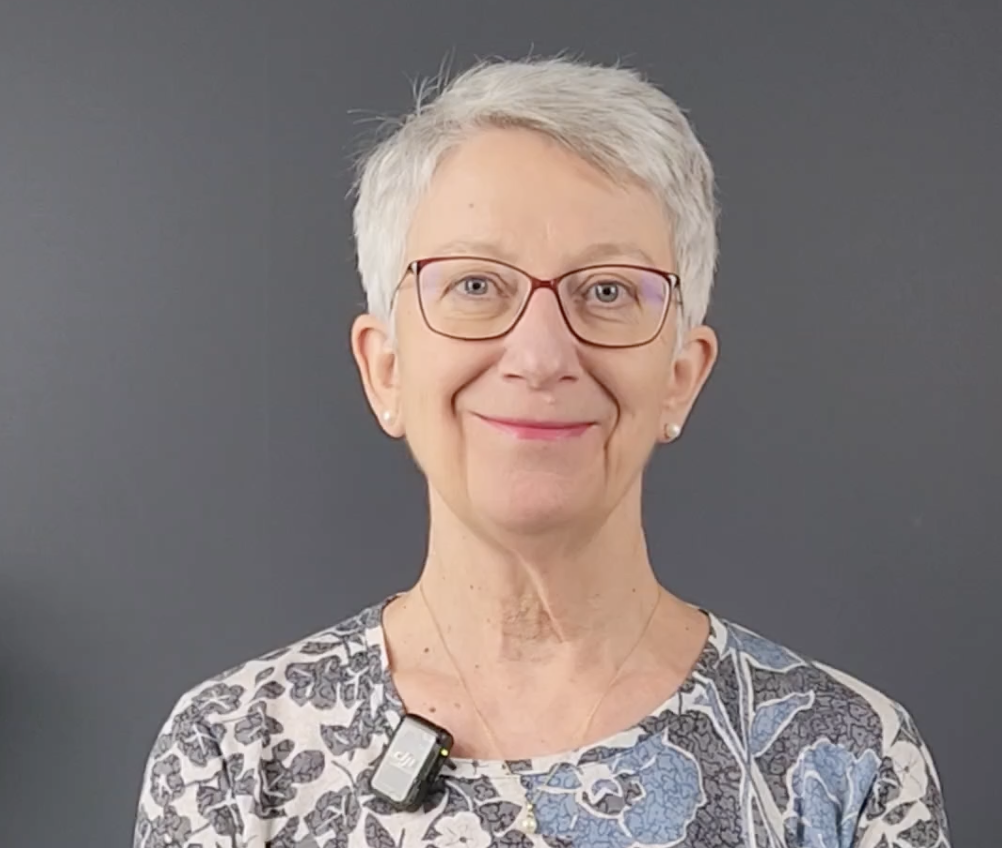
According to Professor Elisabeth Prügl of the Geneva Graduate Institute, this reality should fundamentally reshape how Ukraine’s recovery is imagined.
Professor Prugl leads the international research project Caring to Survive, Surviving to Care, implemented in partnership with V. N. Karazin Kharkiv National University and the Centre for Social and Labour Research in Kyiv. The project explores how war transforms care work and why recognising it is essential for building a resilient and equitable post-war Ukraine.
Care work has grown exponentially during the war
The research documents a dramatic increase in care responsibilities since the beginning of Russia’s full-scale invasion.
Families have had to care for children learning online at home, support relatives injured in attacks or returning from military service, assist older people who have lost their social networks, and help internally displaced people rebuild their lives after losing homes and livelihoods.
At the same time, social workers, nurses, teachers and volunteers have taken on growing responsibilities, often with limited resources and little public recognition.
“The most interesting thing from looking at care labour in Ukraine is just the enormous amount of that labour that is performed,” Professor Prugl explains. “It is clear that during war, care labour explodes exponentially.”
Much of this work happens quietly—in households, neighbourhoods and local communities. Ukrainians help family members, neighbours and strangers alike, while countless volunteers fill gaps left by overstretched institutions.
Yet this immense contribution often remains undocumented.
“Our project is documenting that labour,” Professor Prügl says, “The main takeaway from what we know right now is that war clearly generates a different kind of economy and a different kind of set of needs that are being met by various forms of labour—labour that does need to be recognised.”
Recognition must become a reconstruction priority
One of the project’s central recommendations is straightforward but transformative: unpaid and low-paid care work must be recognised as a cornerstone of Ukraine’s recovery.
Current reconstruction debates often focus on infrastructure, investment and economic growth. While these are essential, Professor Prügl argues they must also acknowledge the work that keeps society functioning every day.
“Women are working extensively, are crucial to building a resilient society, are crucial to the survival of Ukrainians and Ukrainian society today,” she says.
Recognising care work also means investing in the people who perform it professionally. The project highlights the need to strengthen social protection systems and improve wages and working conditions for social workers, nurses, educators and other care professionals.
“They are as important to societal survival as the military,” Professor Prügl emphasises.
Women’s roles are changing—but inequalities remain
The war has intensified debates about gender equality in Ukraine. On one hand, traditional gender roles have become more pronounced as many men serve in the military while women shoulder increasing responsibilities at home and in communities. This has reinforced the unequal distribution of unpaid care work.
On the other hand, wartime has also created new opportunities. Women have entered occupations that were previously less accessible to them, assumed leadership roles and become increasingly visible in public life.
According to Professor Prügl, these developments create both challenges and possibilities for Ukraine’s future.
The country’s European Union accession process has also accelerated important legal reforms. Ukraine has adopted legislation aligning with EU standards on employment discrimination, ratified the Istanbul Convention in 2022, and introduced a State Strategy on Equal Rights and Opportunities for Women and Men.
These reforms, Professor Prugl notes, have significant potential to advance gender equality—provided they are effectively implemented.
Civil society must have a seat at the table
For reconstruction to succeed, Elisabeth Prügl believes decision-making cannot be limited to governments and international institutions.
Instead, civil society organisations—and particularly feminist organisations with first-hand knowledge of women’s experiences—must play an active role in shaping Ukraine’s future.
“Overcoming the war, creating a new society, a more egalitarian society, requires first recognising women’s labour and second including civil society in the reconstruction of a new Ukraine,” she says.