
As part of the research project “Caring to Survive, Surviving to Care,” implemented by the Center for Social and Labor Research (CSLR) with the support of the Swiss National Science Foundation, researchers analyze how the war changed the practices of care, everyday life, and experiences of women in Ukraine and beyond.
The project combines interviews, analytical work, and reflections on how people navigate the dual challenge of surviving while caring for others.
One of the themes that has emerged particularly strongly at this stage of the research is the experience of forced displacement. For many Ukrainian women who became refugees or internally displaced persons, relocation meant not only losing their homes but also losing familiar ways of interacting with the world around them.
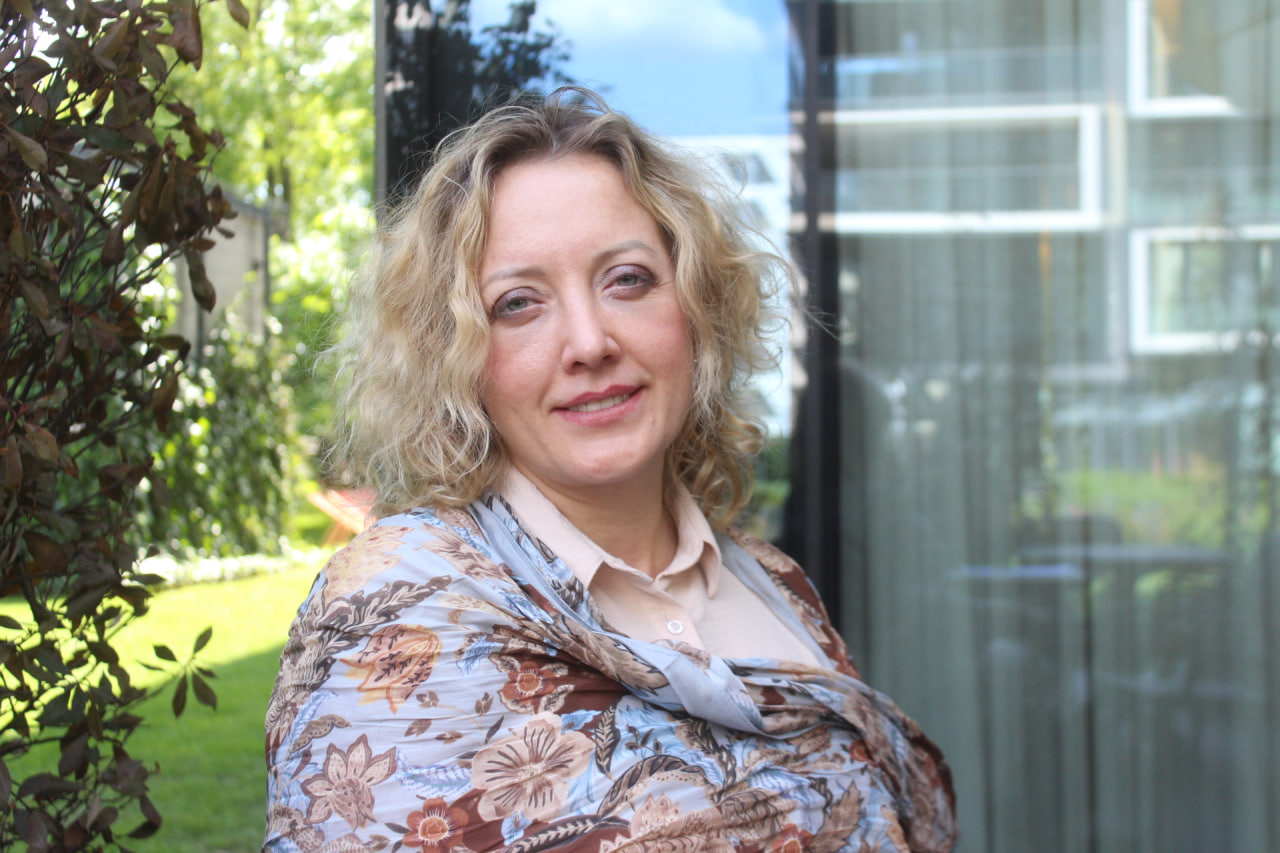
CSLR researcher Nina Potarska explains that the feeling of violence can exist even in the absence of direct physical threats. It manifests itself through the loss of familiar reference points and the need to expend extra effort on even the simplest daily activities.
“When you walk through a city and cannot understand what is happening around you, when you have to make an additional effort just to read signs or understand what people nearby are talking about, it is also about safety. Things that happened automatically at home suddenly require constant concentration in another country.”
According to the researcher, this is one of the less visible forms of violence experienced by people who have been forcibly displaced.
“I experience it as violence because I cannot simply live the way I used to live. I cannot do things in the ways that make me feel calm, comfortable, and safe. This is where the feeling comes from—that some form of violence is being inflicted upon you, even when you cannot always identify it as such.”
Another challenge is the need to learn new linguistic and social norms while living in a different country. What local residents take for granted becomes an additional form of labor for people already coping with stress and uncertainty.
“How do you buy a ticket for public transport? How do you submit documents? What is happening at your child’s school? What does the teacher expect from you? Which language should you use to address her? All of this requires constant effort. Not everyone living under stress has the capacity to learn a new language quickly and not only communicate, but also communicate according to local social norms.”
The research also shows that forced displacement directly affects practices of care. While the war has not changed the fundamental nature of caring for others, it has significantly increased the amount of invisible labor that many women perform every day.
“These simple everyday tasks consume our energy, our time, and our attention. Very often, by the end of the day, you are simply exhausted—emotionally and physically.”
According to Potarska, many women describe their experience as if they had been abruptly moved into a new environment and expected to adapt immediately.
“We were simply relocated and told that we now have to live here and learn to love this city, this place, these people. But that, too, is a form of coercion. It requires enormous psychological, communicative, and intellectual effort. Every day is lived at the limit of concentration, and that is deeply exhausting.”
For this reason, researchers note, many Ukrainian women continue to feel a strong attachment to home even after several years abroad. This is not merely nostalgia. It is also a desire to return to a place where they do not have to spend so much energy adapting, translating themselves, and constantly navigating unfamiliar surroundings.
The research is ongoing, and its findings help illuminate some of the less visible consequences of war—those that may not appear in official statistics but nonetheless shape the everyday lives of millions of people.
More on the project “Caring to Survive, Surviving to Care: Gendered survival practices, social reproduction and circuits of violence in Ukraine” you can find on the page of the Geneva Graduate Institute.